


Most of us only think about the garden fence when a winter storm has left a panel flat on the lawn. If yours is starting to lean or rattle, now is a good time to plan ahead. The short answer is that strong, well-set posts matter more than anything else, followed by a sturdy design that suits how exposed your garden is. Our garden fencing work across Brentwood and the surrounding Essex towns starts with exactly those questions.
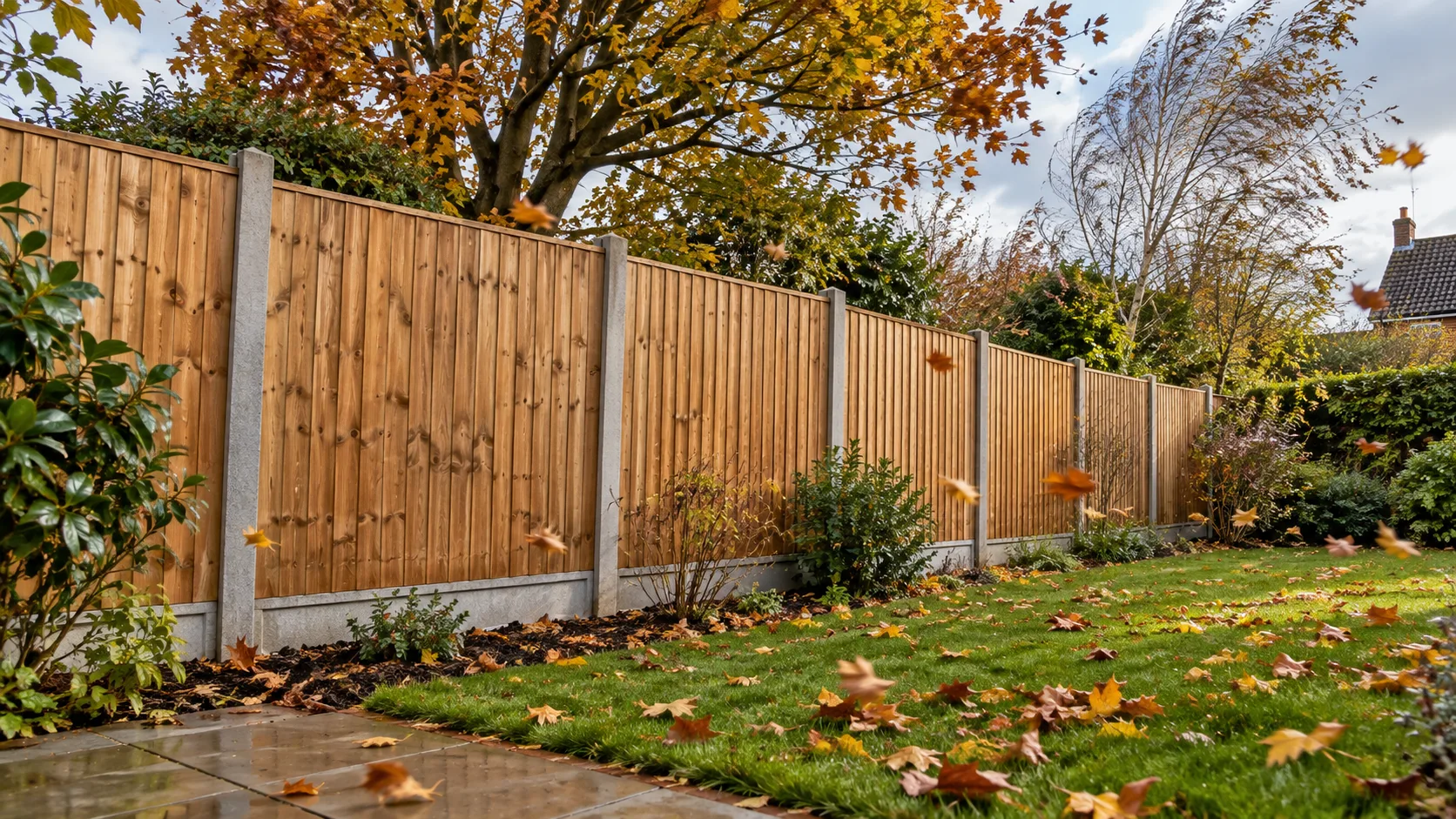
Why fences fail in winter storms
A solid fence acts like a sail. When strong gusts hit a run of panels, all that force is passed to the posts and their footings. Most storm damage comes down to one of three things:
- Rotten or weak posts. Timber posts rot fastest at ground level, where they stay damp, and a post that looks fine above ground can be soft at the base.
- Shallow or poor footings. Posts that aren’t set deep enough, or are set in loose ground, can rock and eventually snap or lean.
- Lightweight panels. Thin panels with small, stapled slats can blow out of their frames even when the posts survive.
Posts: concrete or timber?
Concrete posts
Concrete posts don’t rot, so they’re a popular choice in exposed gardens. Panels usually slide into slots in the posts, which makes it easy to replace a damaged panel without disturbing the posts. Many people pair them with concrete gravel boards along the bottom to keep timber off the damp ground.
Timber posts
Good quality, pressure-treated timber posts can look more natural and suit some designs better, such as closeboard fencing or a contemporary slatted fence. To give them the best chance, they need to be set deep enough in a suitable footing, with the base protected from standing water.
Either way, how well the posts are installed matters as much as what they’re made of.
Choosing a fence design for exposed gardens
Closeboard fencing
Closeboard fencing is built in place, with overlapping vertical boards fixed to horizontal rails between the posts. It’s generally stronger than thin, ready-made panels and offers good privacy, which is why many people choose it for boundaries that take the brunt of the weather.
Slatted and hit-and-miss fencing
Designs with small gaps between the boards let some wind pass through rather than taking the full force. That can reduce the strain on posts in very exposed spots, while still giving a good degree of screening.
Brick walls and piers
For some properties, a low wall or brick piers with fence panels between them is worth considering. It’s a bigger project, but brickwork can add strength and a more permanent look to a boundary.
Essex gardens and the wind
Gardens on the edge of open farmland around Ongar and Epping, or on higher ground, often feel the wind far more than those tucked between houses in the middle of Brentwood or Chelmsford. Corner plots and long, open back gardens catch gusts from several directions. If your fence has blown down before, it’s worth thinking about both the design and the posts, rather than simply replacing like for like.
Autumn checks before the storms arrive
- Push gently on each post to check for movement.
- Look for soft, crumbling timber at the base of posts and along gravel boards.
- Check panels are seated properly and fixings aren’t loose or rusted.
- Cut back climbing plants and heavy ivy, which add weight and catch the wind.
- Keep soil and leaves from piling up against the bottom of the fence.
Frequently asked questions
What type of fence is best for windy gardens?
A well-installed fence on strong posts is the most important thing. Concrete posts with sturdy panels or closeboard fencing are popular in exposed gardens, and designs with small gaps between the boards let some wind through. The right choice depends on how exposed your garden is, the privacy you want and your budget.
Are concrete fence posts better than timber?
Concrete posts don’t rot, which makes them a reliable choice where fences take a lot of weather, and panels can be swapped without disturbing them. Pressure-treated timber posts look more natural and suit some designs better. Both can last well if they’re installed properly in a suitable footing with good drainage.
Why do fence panels blow out in storms?
Solid panels catch the wind like a sail. Thin panels with lightweight slats can blow out of their frames, and weak or rotten posts can lean or snap under the extra load. Checking posts and fixings in autumn and choosing a sturdier design when replacing helps reduce the risk of storm damage.
Planning a new fence this winter?
If your fence is leaning, rotting at the base or has already lost a panel or two, give us a call on 01277 824 093 or drop us a message and we’ll come and look at your boundary and suggest a fence that suits how exposed your garden is.