


As the leaves come down and the garden stays damp for days at a time, that clean grey or cream porcelain patio can start to look a little green around the edges. The good news is that porcelain is one of the easiest paving materials to keep clean. Warm water, a mild detergent and a stiff brush handle most jobs, and regular sweeping stops algae getting a foothold. If you’re thinking about a new porcelain patio for your home in Chelmsford or elsewhere in Essex, low maintenance is one of its biggest draws.
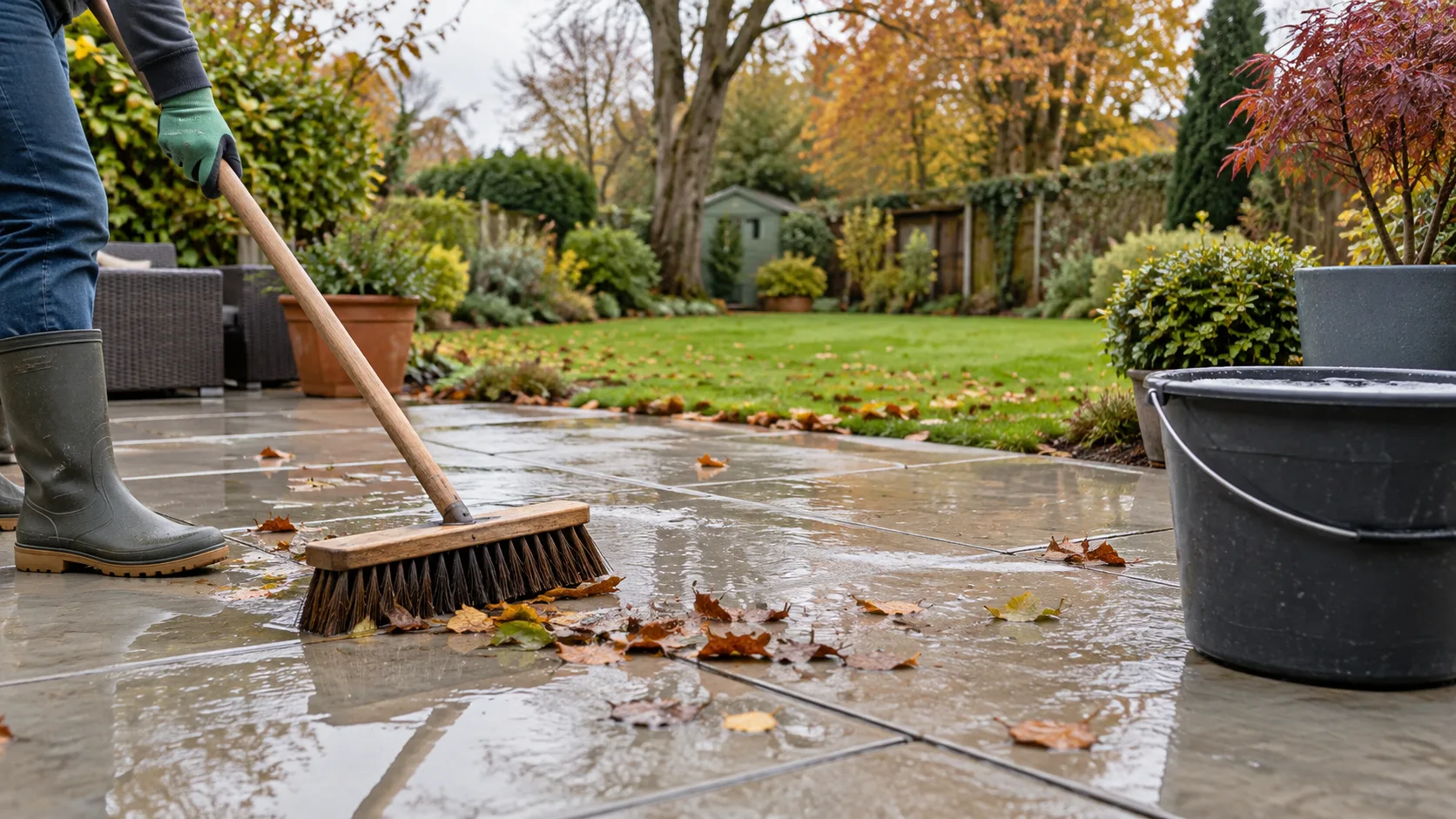
Why porcelain gets green in autumn
Porcelain paving is fired at very high temperatures, which leaves it dense with very low water absorption. That means algae, moss and lichen can’t root into the slab itself the way they can with some natural stone. What you’re usually seeing is a film sitting on the surface, or growth in the joints and along the edges where soil, leaves and moisture collect. Shaded patios and those under trees are the first to turn green.
A simple routine for regular cleaning
For most porcelain patios, this is all you need:
- Sweep off leaves, soil and debris with a stiff outdoor brush.
- Mix warm water with a small amount of washing-up liquid or a pH-neutral patio cleaner.
- Scrub the slabs, working in sections and following the direction of any texture on the surface.
- Rinse thoroughly with clean water so no soapy residue is left behind to attract dirt.
Doing this every few weeks through autumn, and after heavy leaf fall, keeps algae from building up in the first place.
Shifting stubborn algae and stains
If green film has already taken hold, a cleaner made specifically for porcelain paving is the next step. Always check the slab manufacturer’s guidance and the cleaner’s label before you start, and test any product on a small, hidden area first. Some products that are fine on the porcelain itself may not suit the jointing compound or grout, or nearby plants, so read the instructions carefully and keep run-off away from lawns and borders.
Leaf marks usually lift with regular cleaning. For rust or barbecue grease, use a product made for porcelain and check it suits your joints first.
Should you pressure wash a porcelain patio?
Porcelain slabs themselves are tough, but the joints between them are often the weak point. A high-pressure jet held close to the joints can loosen or wash out brush-in jointing compound and older sand and cement pointing, leaving gaps where weeds and water can get in.
If you do use a pressure washer, keep to a low pressure setting, use a wide fan nozzle or a patio cleaning attachment, hold it at a distance and avoid aiming straight into the joints. Check the paving and jointing manufacturer’s guidance first, as some recommend against pressure washing altogether. For many homes, a stiff brush and the right cleaner does the job just as well.
Keeping algae at bay through an Essex winter
Gardens across Brentwood, Shenfield, Billericay and Chelmsford see plenty of damp, grey days over winter, and patios near mature trees can stay wet for long spells. Whether you have an existing patio or a new patio in Brentwood or nearby, the same habits help:
- Sweep regularly, especially after leaf fall, so organic matter can’t break down on the surface.
- Trim back overhanging branches and shrubs to let in more light and air.
- Keep drainage channels and gaps at the patio edge clear so water runs away.
- Check the joints each spring and autumn and have any gaps repaired before they let water underneath.
Frequently asked questions
What is the best way to clean a porcelain patio?
For routine cleaning, sweep away debris, then scrub with warm water and a little washing-up liquid or a pH-neutral patio cleaner and rinse thoroughly. For stubborn algae or stains, use a cleaner made for porcelain paving, following the manufacturer’s guidance and testing it on a small hidden area first.
Can algae damage porcelain paving?
Algae can’t root into porcelain the way it can with some natural stone, because the slabs absorb very little water. It sits on the surface and in the joints, where it makes the patio look tired and can make it slippery when wet. Regular sweeping and cleaning usually keeps it under control.
Is it safe to use bleach on a porcelain patio?
We’d suggest avoiding household bleach. It can harm plants, lawns and wildlife if it runs off, and it may not suit your jointing compound. A cleaner designed for porcelain paving is a safer choice. Always read the label and check the slab manufacturer’s care guidance before using any chemical cleaner.
Thinking about a new patio?
If you’d like a patio that’s easy to look after, give us a call on 01277 824 093 or drop us a message and we’ll talk you through porcelain and other paving options and arrange a visit to see your garden.