


Good patio lighting does far more than help you find the back door after dark. It can make an outdoor dining area feel warmer, highlight planting and allow you to use the garden well beyond sunset. The best results come when lighting is considered alongside the paving, steps and seating, which is why professionally designed patios usually include the lighting plan from the outset.
You do not need dozens of fittings or an overly complicated system. A few carefully positioned lights will generally look better than one very bright floodlight. The trick is to combine different types of light, while keeping glare and unnecessary wiring to a minimum.
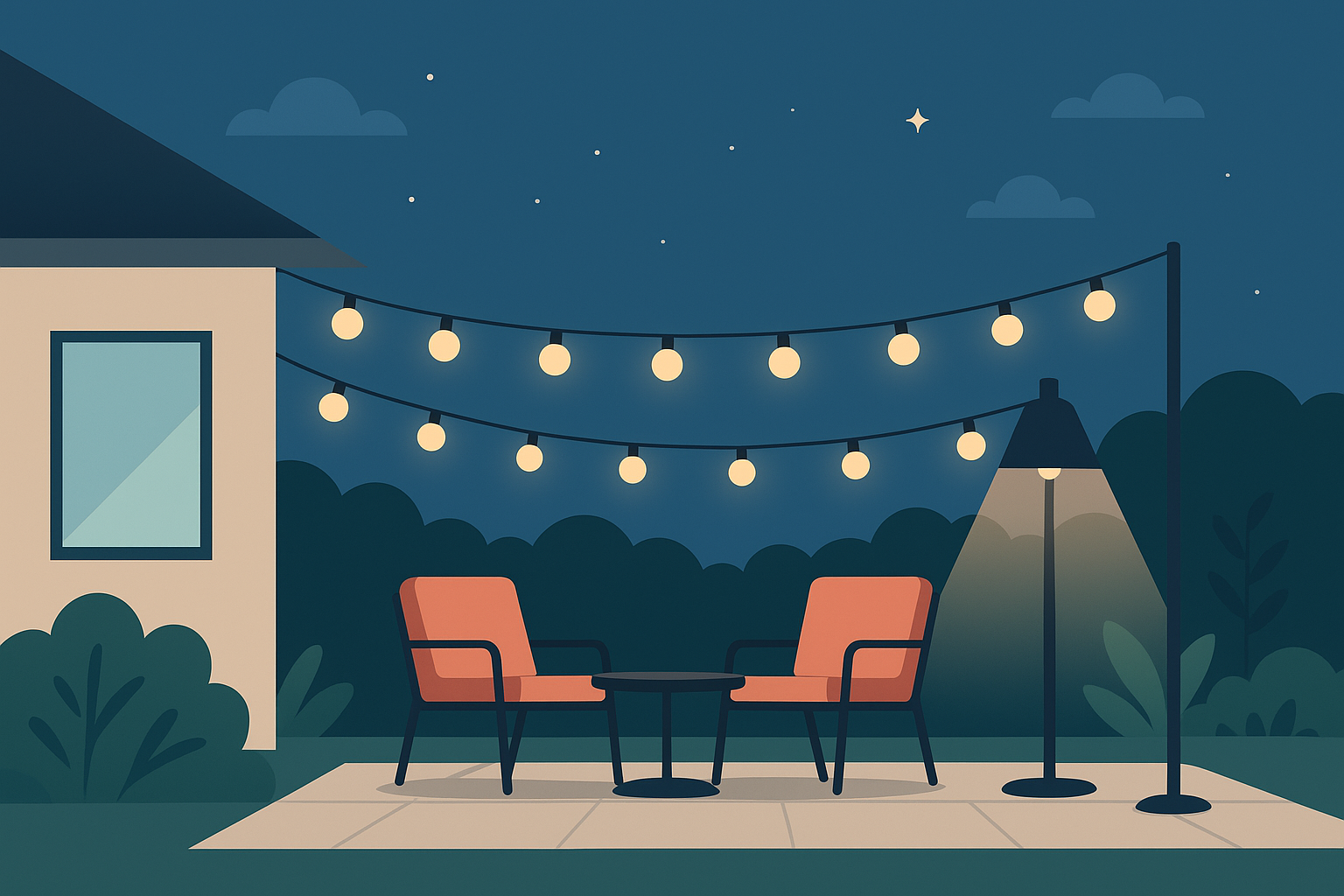
Layer Your Patio Lighting
Outdoor lighting works best in layers. In practical terms, that means using separate lights for general visibility, specific tasks and decorative features. Relying on a single fitting tends to create harsh shadows, particularly around tables, steps and raised beds.
Ambient lighting
Ambient lighting provides a comfortable background level of illumination. Wall lights, festoon lights and discreet fittings beneath a pergola can all do this job. The aim is not to make the patio as bright as a kitchen. You should still feel as though you are sitting outdoors.
Task lighting
Task lighting is used where you need to see clearly. Typical examples include a light beside the barbecue, a fitting above an outdoor kitchen worktop or a downlight near the back door. These lights can be brighter, but they should point towards the working surface rather than into people’s faces.
Accent lighting
Accent lighting draws attention to selected details. A narrow uplighter beneath a multi-stem tree, for example, creates shape and shadow without flooding the whole garden. Lighting a textured wall, water feature or specimen plant can also give the patio a sense of depth after dark.
A question customers often ask is whether every feature should be illuminated. Usually, the answer is no. Leaving darker areas between pools of light creates contrast and makes the features you have chosen stand out more clearly.
Patio Lighting Ideas That Work in Real Gardens
The right fittings depend on the size and layout of your space. A compact terrace behind a Victorian property needs a different approach from a large contemporary patio with several seating zones.
- Wall lights: Useful beside doors and around dining areas. Up-and-down fittings create an architectural effect, while shaded lamps often suit traditional brickwork better.
- Recessed spotlights: These can be fitted into paving, steps or retaining walls. They should be positioned carefully so that they mark an edge without shining upwards into people’s eyes.
- Festoon lights: Ideal for creating a relaxed atmosphere above a seating area. Support them properly with a tension wire rather than allowing the electrical cable to carry the weight.
- Lanterns: Portable lanterns add soft light around tables and lounge furniture. Battery-powered versions are convenient where a permanent electrical supply is not available.
- Uplighters: Place these at the base of trees, structural planting or textured walls. Adjustable heads are useful because plants change shape as they grow.
- Illuminated planters: These can define the edge of a modern patio, although they are most effective when used sparingly rather than placed around every side.
Think about what the light will look like from inside the house too. During winter, illuminated trees or planting can provide a much better outlook than a reflection of the room in dark glass.
Local plot sizes and building styles vary considerably. A patio in Shenfield may have mature boundaries that benefit from subtle uplighting, while gardens in Billericay often have room for separate dining and lounging zones. In more compact Upminster patios, wall-mounted and recessed fittings can save valuable floor space.
Plan for Safety and Efficiency
Steps, changes in level and narrow routes should be dealt with before decorative lighting. Small recessed lights in step risers can work well, as can low-level fittings beside a path. Make sure the start and finish of each change in level are visible. One isolated bright spot halfway down a flight can make the remaining steps harder to judge.
Outdoor fittings must have a suitable IP rating for their location. A sheltered wall fitting has different requirements from a spotlight exposed to rain or a recessed unit sitting in paving where water can collect. As a practical rule, do not buy fittings based on appearance alone. Check that they are intended for permanent outdoor use and follow the manufacturer’s installation guidance.
Any new mains-powered circuit should be installed by a suitably qualified electrician. Cables need proper protection, connections must remain weatherproof and the circuit should have appropriate RCD protection. If a patio is being laid, install ducts before the sub-base and paving go down. It is far easier than lifting finished slabs later.
LED lamps use relatively little electricity and last well, provided the fitting keeps moisture away from the electrical components. Smart controls can divide the garden into zones, dim selected lights and set automatic schedules. A simple arrangement might keep step lights on while switching decorative uplighters off later in the evening.
Solar lighting is useful where running a cable is impractical, but quality varies. Small budget fittings often struggle through a run of dull winter days. Use solar lights for gentle decoration rather than relying on them as the only illumination for steps or access routes.
Match the Lighting to Your Patio
For a contemporary patio, simple black or dark grey fittings tend to sit neatly alongside porcelain paving, rendered walls and slatted screening. Recessed lights and linear LEDs can create a crisp finish, but the light source should be concealed wherever possible. Visible strips of intense LEDs can quickly make a seating area feel uncomfortable.
Traditional spaces often suit aged brass, bronze or dark metal lanterns. Warm wall lights complement clay pavers, natural stone and older brickwork without making the scheme feel theatrical.
In a natural garden, keep the fittings discreet and concentrate on planting. Spike lights can be moved as borders mature, while low-level lamps among grasses produce softer shadows. Avoid illuminating hedges continuously through the night, particularly where birds, bats and insects are active.
Colour temperature makes a noticeable difference. Warm white light, generally around 2700K to 3000K, is comfortable around seating and works well with brick, timber and warmer paving tones. Cooler white light can suit a sharp modern scheme, but too much of it may make the patio look stark. Try one fitting at dusk before committing to a full set.
Create a Patio That Works After Dark
A successful lighting scheme begins with how you plan to use the space. Mark the routes, steps and work areas first, then choose a small number of walls, trees or planting features to highlight. Separate controls will give you flexibility, allowing the patio to be practical during a family meal and softer when you are relaxing later.
If you are planning a new patio, discuss ducts, cable routes and fitting positions before construction starts. For advice on combining paving, levels and lighting into one practical design, create your ideal outdoor space with Elite Landscapes.